

From prototype to product
Scale your MVP: from prototype to product.
Built a prototype in Lovable, Bubble or with a freelancer, and now it won’t scale, or you just don’t want to wrestle the engineering yourself? We’re engineers. We take over no-code and vibe-coded apps, re-engineer them properly, and grow them so you can focus on the business.
Why us
Anyone can start an app with AI. Engineering is what makes it last.
The hard part isn’t the first version; it’s the database, the architecture and the scaling. That’s the part we own.
Engineers, not a no-code shop
We understand the architecture, the database and the trade-offs, which is exactly what a prototype that has hit its limits needs. AI is our tool, not our crutch.
We take over your codebase
Lovable exports clean React/TypeScript and Supabase; we pick it up, stabilise it and build on it. Bubble locks you in, so there we plan a clean migration.
Scale, don’t always rewrite
Where your foundation is sound we build on it; where it isn’t, we re-engineer the parts that matter. No vanity rewrites: the goal is a product that scales, for the least work.
AI-accelerated & direct
The same AI-accelerated approach that ships MVPs fast makes taking one over fast and affordable, and you work directly with the engineer doing it.
What we do
Take it over, make it scale.
Take over & stabilise
We inherit the codebase, fix what’s fragile and get it to a reliable, deployable state you can trust.
Re-engineer to scale
A proper backend, database and architecture so it handles real users and real data, not just a demo.
Migrate off no-code
Move off Bubble, Wix or Lovable onto a standard, ownable stack you can grow and hire for.
Proof
Real prototypes, taken to working products.
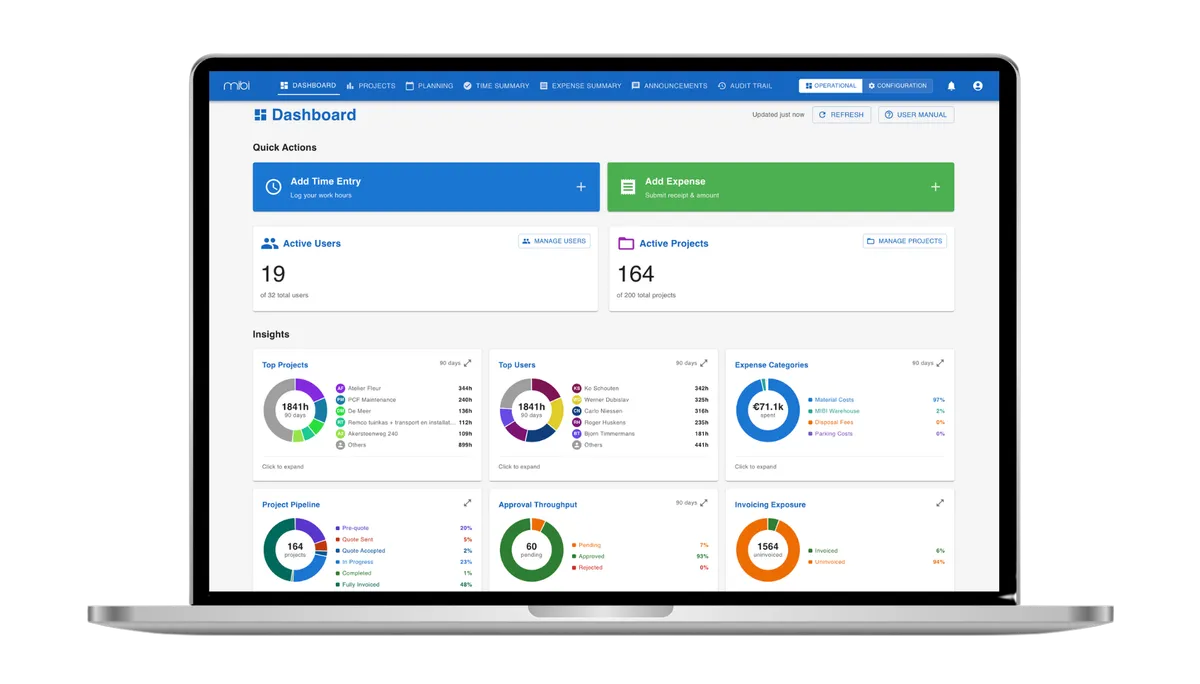
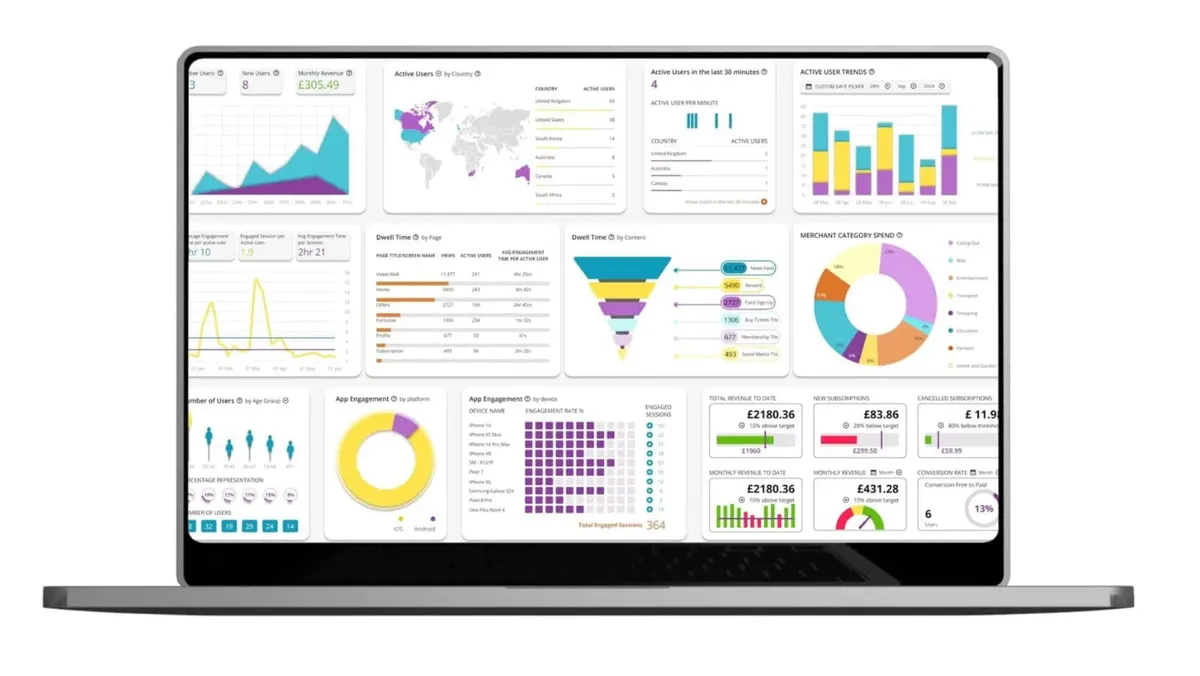
As fractional CTO we took products from prototype to working build, including the Qorbis analytics platform (Python/AWS). And we scaled mibi from a single field app into a full platform with a web dashboard and backend. Real engineering, not a template.
Good to know
Questions about scaling an MVP
Can you take over an app I built in Lovable or Bubble?
Yes. Lovable exports clean React/TypeScript and a Supabase backend, which we pick up and build on. Bubble can’t export, so there we plan a migration to a standard stack, but either way you end up with something you own and can scale.
Will you rewrite everything, or build on what I have?
We build on a sound foundation and only re-engineer the parts that genuinely need it. No vanity rewrites: the goal is a product that scales, for the least work and cost. How far we go depends on where you are heading, because a platform serving a thousand users is a very different beast to one serving a million with text, video and images. That is the question the analysis answers before anyone quotes a build.
My MVP works but I don’t want to deal with the engineering. Can you just run it?
Yes. Plenty of founders want to focus on customers and fundraising, not databases and scaling. We take the engineering off your plate, with one point of contact: the engineer actually doing the work.
How much does it cost, and how does it work?
Three parts. A free 30-minute call to understand what you have built and where you want to take it. Then a fixed-price analysis from €1,500: we go through the codebase, the data and the architecture, and within five working days you get a written report with the findings, a recommended target architecture and a phased delivery plan. Then a fixed price for the build, test and launch of each phase, quoted from that report. If you go ahead within 30 days, the analysis fee comes off the first phase in full. Hosting, support and ongoing changes are time and materials afterwards. You can stop after the report and take it to anyone: it is yours.
How long does it take to go from a Lovable prototype to App Store ready?
Typically two to four weeks for the first release, once the analysis is done. We phase it deliberately rather than cramming everything into release one, so you get something real in front of customers early. Apple’s review then takes roughly one to three days, so the honest promise is shipped to the App Store in a few days, not live the same day. Behind that first release sits a three to six month feature roadmap, and a higher-level view out to twelve and twenty-four months.
Why phase it instead of building the whole thing?
Because a first release that carries every feature is the most common way these projects fail. It delays revenue, it multiplies what can go wrong at launch, and it commits you to decisions before any customer has used the thing. We ship the core flow first, learn from real use, and build the rest against a roadmap that stays under review. This is how our founder delivered software in aerospace, defence and investment banking, where you do not get to launch everything at once and hope, and it works just as well for a startup.
Why won’t my MVP scale?
Almost always the database, not the code. A prototype stores data in whatever shape was fastest to build, with no indexes, no constraints and every tenant’s records mixed together. It works for ten users and falls over at a few hundred. The fix is a proper schema and clear boundaries between tenants, which is a rebuild of the foundation rather than the features.
Is Lovable good enough for production?
Lovable is genuinely good for getting to a working prototype, and its own documentation recommends validating with it and then building the production version. It exports clean React, TypeScript and Supabase, so the code is a real starting point rather than a dead end. What it does not give you is architecture: multi-tenancy, migrations, access control, testing and a deployment pipeline are the work that turns the export into a product.
When should I move off no-code?
Three signals, and one is usually enough: paying customers now depend on it, you are hitting limits the platform cannot lift, or you cannot hire someone to work on it. Cost per user climbing as you grow is the fourth. Moving before any of those is premature; moving after all four is expensive, because you migrate under pressure with customers watching.
Can you build multi-tenant software that handles real customers?
Yes, and it is the most common thing we are asked to fix. mibi (mibihub.app) is our own proof: a field-service platform running five active tenants with thousands of records each, where every company’s data is isolated, the schema is indexed for the queries it actually runs, and adding the next tenant is configuration rather than engineering. That is the difference between a prototype and a product.
Send us your app.
Tell us what you’ve built and where it’s stuck. Start with a free 30-minute call, direct with the engineer who would do the work. If it looks like a fit, the next step is a fixed-price analysis and a written plan you own.