

One build, every language
Multilingual websites and apps, built by engineers.
Selling into more than one language is an engineering problem before it is a translation problem. We build sites and apps that are multilingual from the foundation: real URLs per language, correct hreflang, and SEO researched in each market rather than translated from English.
Why us
The words are yours. The machinery is ours.
Most agencies treat a second language as a plugin. It is a structural decision that touches routing, metadata, search and the CMS, and it is far cheaper to get right at the start.
Built in, not bolted on
A second language added later means retrofitting every URL, every template and every piece of metadata. We build the language layer into the foundation, so adding the third language costs a fraction of the second.
Real URLs per language
Native slugs in each language, not a query string or a subdomain fudge. Search engines index each version properly and readers get a URL that makes sense in their own language.
SEO per language, not translated
Keywords do not translate. We research each market in its own language, because the phrase your Dutch customers type is rarely the literal translation of the English one.
English-native, honest about it
We are a native English studio. Copy in other languages is supplied by you or translation-assisted and reviewed by a native speaker you trust. We build the machinery; we do not pretend to write the French.
What we build
Two languages, or ten.
Bilingual marketing sites
Two languages, one build: shared components, per-language content, correct hreflang, and a CMS where both versions sit side by side.
Multilingual apps
iOS, Android and web apps with language handled properly in the interface, the content and the data, so a new locale is configuration rather than a rebuild.
Adding a language to what you have
Already live in one language and expanding? We retrofit the routing, metadata and CMS structure so the second language ships cleanly.
Proof
Two bilingual builds, both live.
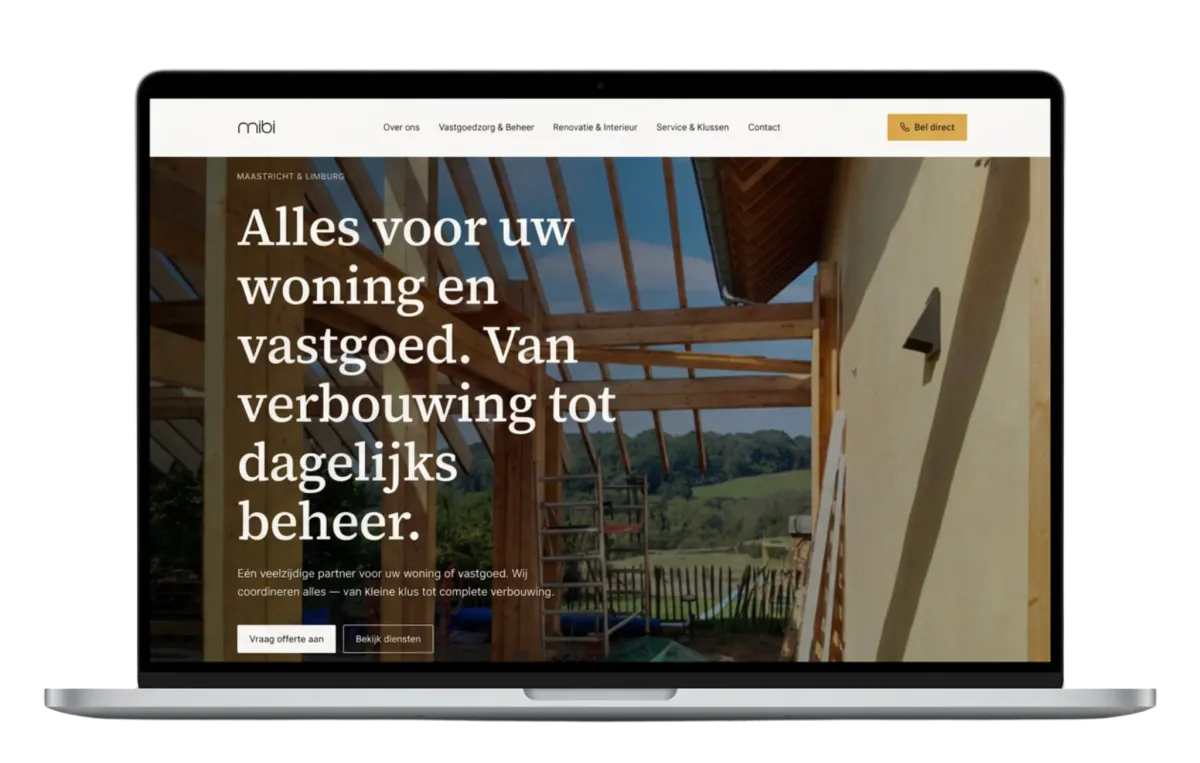
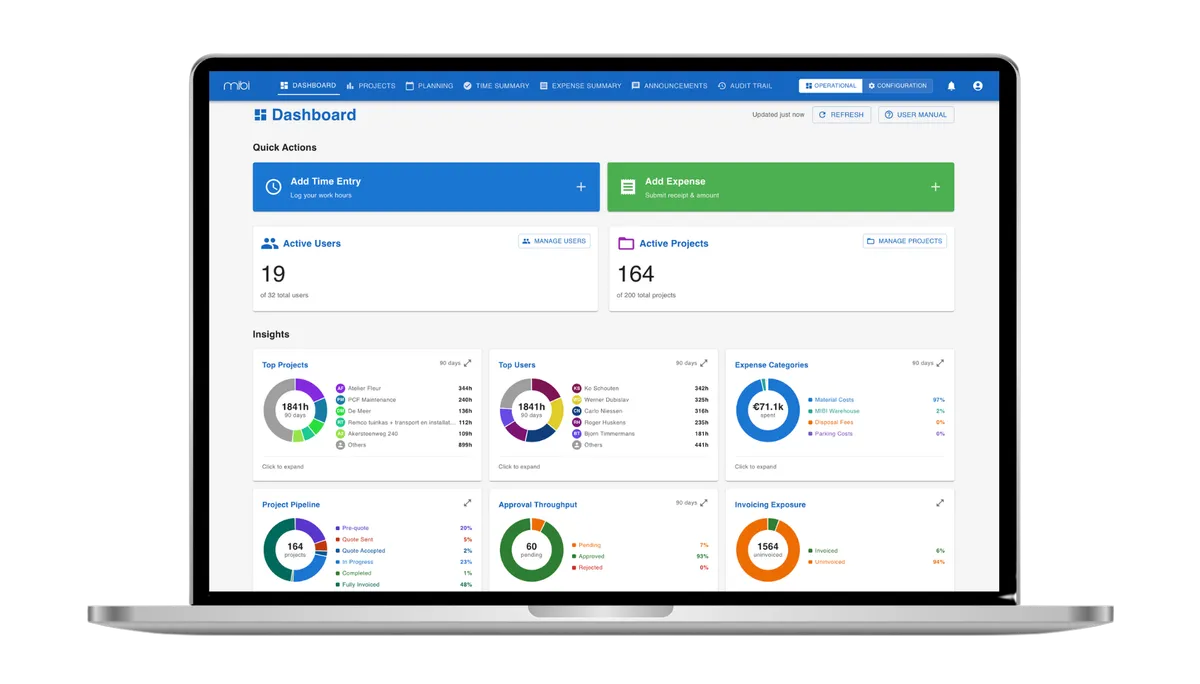
Meesters in Bouw runs in English and Dutch, with per-language SEO and a CMS the client writes in herself. The mibi product site does the same. Both were built bilingual from the start, which is why adding a page in either language costs the same as adding one in English.
Good to know
Questions about multilingual builds
Do you write the French, Dutch or German content yourselves?
No, and we say so up front. We are a native English studio. Content in other languages is either supplied by you or translation-assisted and then checked by a native speaker. We build and run the multilingual machinery: the routing, the hreflang, the per-language SEO and the CMS. That split is why the work is reliable, because nobody is guessing at a language they do not speak.
Have you actually built a multilingual site before?
Twice, both in English and Dutch. Meesters in Bouw is a full bilingual marketing site with per-language SEO and a CMS the client edits in both languages. The mibi product site runs the same way. Neither is a plugin translation layer over an English site; both are built bilingual from the first line of code.
Why not just use Google Translate or a translation plugin?
Because search engines index the result and customers read it. Machine translation produces copy that reads as machine translation, which damages trust in exactly the market you are trying to enter, and auto-translated pages risk being treated as low-value content. The structure can be automated. The words should not be.
We are a French company expanding beyond France. Can you help?
This is the work we are built for. You already have the French, and what you need is an English version that reads as though it was written in English rather than translated into it, with the technical structure to rank in both markets. We run the engagement in English, build both language versions properly, and your French stays yours.
How much more does a second language cost?
Less than people expect, provided it is planned from the start. The templates, components and build are shared, so the added cost is the content, the per-language keyword research and the extra QA rather than a second website. Retrofitting a language onto a site that was not designed for it is the expensive path, which is why we ask about it at the quote stage.
What is hreflang and do we need it?
Hreflang is the tag that tells search engines two pages are the same content in different languages, so they show the right one to the right reader instead of treating them as duplicates. If you publish in more than one language you need it, and getting it subtly wrong is common. We set it up with correct language codes, self-referencing tags and an x-default, and verify it in the build.
Can our team edit both languages themselves?
Yes. We set the CMS up so each entry has its language versions together, so whoever edits the English can see what the Dutch or French says beside it. No developer is needed to publish a change, in either language.
Which languages do you work in?
We have shipped English and Dutch, and we build English and French regularly. Technically the language does not change the engineering, so we can build for any left-to-right language where you can supply or approve the content. Right-to-left languages such as Arabic or Hebrew need extra layout work, which we would scope explicitly rather than assume.
Which languages do you need?
Tell us the markets you are selling into and what you have already. We will come back with a fixed-price plan covering both the build and the language structure behind it.